Sunday, November 22, 2009
by Smith
-

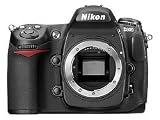
This is up there with Nikons's very best. The holey grail will be the D3, with this one being a close 2nd. Very, very fast focusing, improved focusing screen, very bright viewfinder, good with manual focus lenses, live view LCD, very good for studio photography. Battery is the same one used for the D200 but does not last as long with the D300. Nice size, weight and balance. Camera body fits "just right" in your hand. All of the controls are in just the right places. This one is a keeper.
Get more detail about Nikon D300 DX 12.3MP Digital SLR Camera (Body Only).
Saturday, November 21, 2009
by Smith
-
I have used this camera for only a few days and am very satisfied and enthusiastic. Nikon has made an excellent product. I won't bother writing about the various technical features. Those are already amply detailed in the camera description. Here are a few first impressions that I have of the camera:
You can change ISO very quickly and it goes up to 3200. Very useful.
There are many playback features such as zooming in close on an image and navigating around in it. A big improvement over previous models.
The new playback screen is much bigger and has an awesome resolution. You can live preview on it. Very cool!
There are several focus options, including the 51 point focus.
You can press help on any menu item and it will explain what that item is clearly and easy to read.
The menu is easy to navigate and easy to use. The 421 page User's Manual may seem daunting at first, but it's very clearly written and has several ways to cross-reference what you are looking for
The camera is comfortable to hold, has a solid feel and all of the controls are within easy reach. Shooting mode, ISO and most other controls can be easily changed without going into the menu.
All the above are features, but the most important benefit is excellent and sharp images.
If you would like to see some samples, email me and I will send you a link so you can check them out. I am very satisfied and I am glad I bought this camera. I may add to this review as I use this camera more. I just wanted to write a review to express how satisfied I am.
Note November 29: After 300 shots the battery indicator is on half empty. If correct, then battery life much shorter than D50. Unfortunately only a EN-EL3e battery will work. This means I have to buy another battery.Get more detail about Nikon D300 DX 12.3MP Digital SLR Camera (Body Only).
by Smith
-
I had this camera and the D3 on order ever since they were annouced, with my luck the D300 came in first! I just picked it up today! Although I need the D3's full frame more! However, it is an excellent camera for the $$, I only paid $1800+ tax, mind you I spend a lot at my dealer over the years! I owned and still own a couple of Nikons, so for me it was a very easy transition, and finally Nikon has a good comprehensive manual to go wth the camera ifyou need any help. Also, for the first time the Capture NX is included - sort of: Ok I had to download it, and insert the product key, regardless this is a good step by Nikon, and it was about time!!
The focusing screen is much better designed now, and if you get the MD-D10 multi-power battery pack for the built in motor drive, it will be faster than my D2X and also has a lot bigger buffer up to 100 shoots for jpg, vs only 35 on my D2X, and with the right adapter BL-3 it will take the same high capacity battery as my D2X uses! The only drawback is that nobody has the BL-3 adapter in STOCK!
As for image quality, it is excellent even at higher ISO, I tested the D300 at 400, 800 and 1600 ISO, unlike the D2X which is only good up to 320 or maybe 400 before some noise is noticable and gets worse very fast after that as ISO is increased. (I am not talking about for 4x6" prints or just looking on the monitor but for 11x14"prints and up!!)
I highly recommend this camera, it is better than my more expensive D2X or D2Xs, performance and price wise!!! In fact you could buy 2 DX300s for the cost of one D2Xs! Finally Nikon has a winner! Get more detail about Nikon D300 DX 12.3MP Digital SLR Camera (Body Only).
Friday, November 20, 2009
by Smith
-
Since 2006 I have owned a D200 for serious shooting situations and I got a D40 in early '07 for everyday shots (an awesome camera - I give it SIX stars! - a whole separate review is needed!), and after hearing about the D300 release in late 2007 I debated over whether to get one. I was really happy with my D200, which I took on some overseas trips and it performed perfectly. After demo-ing a D300 in stores and reading some online reviews, I decided to take the plunge. It was a big investment but now I have no regrets - if not for the entire package, then for one thing: COLOR! Or one more thing: what Nikon calls 'Active D-Lighting' (translation: a significant change in the processor's realistic rendition of contrast, highlights, shadows, etc. - the entire package of "TONE"). Also - can an LCD rear-screen get any better than this?? In Jim Cramer-parlance I have to say that this model is definitely "best of breed".
Pluses and minuses: (note: edited every once in a while since I've used it for almost 6 months now and thousands of captures - last edit was done on 4/9/08)
PLUSES:
- Incredibly vivid, pleasingly, really surprisingly saturated color reminiscent of Velvia (high-saturation Fuji film used in slides, etc.) is now made possible by selecting the "Vivid" option in the "Picture Control" menu and cranking up the "Saturation" option - there are three levels beyond the default "0" - which sets it just about at the highest possible saturation that could be set in the D200. Even boring photos of things around the home, outside, etc. seem interesting and... well, exciting and vivid... with it set at +2 or +3 (although the +3 setting is a bit extreme for people photos, and renders their skin color a bit more intense than appears naturally). At the +3 setting even blase photos of ordinary things approach purposely-understated "art" in a MoMA-like way. For people I am finding Vivid+1 or Vivid+2 a bit more natural indoors with natural light, as the Vivid+3 saturates just a bit more than I prefer. Just like Velvia, these settings also do not warm the cool colors - one of the minuses of other cameras' 'vivid' settings - this is what's best (your cool blues, greys, greens, etc. stay cool, while the reds, yellows, oranges, bright blues/greens/etc. - watch out!) (Edited note: after about 3,000 shots I saw that indoors it might be best to do a manual white balance preset off a white wall or carpet or something and then shoot in vivid mode, since in the automatic WB mode the reds tend to get boosted quite a bit under typical indoor light and some of my subjects looked like they had a very dark suntan, or even a sunburn, in the middle of December! Careful with this... also tried standard - i.e. not vivid - color settings with +1 or +2 saturation, and these were very realistic, although the backgrounds can be dull if you're intent on vivid colors all-around. Maybe best to use those on portraits only. Try them all out and see what works best.)
- On-board so-called "Active D-Lighting" renders shadows and highlights in an very realistic manner, with no raising up of delicate shadow tones to mid-levels (as my outstanding, near-perfect-in-its-class Nikon D40 tends to do) - this really must be seen to be believed. Coupled with the color quality (and deep saturation noted above), the detail in the highlights is excellent. The D40/D200 have this feature in post-capture (i.e. you adjust the captured image yourself) but this seemed rather crude; here it is said that the Nikon actually computes the needed adjustment and does it specifically for the scene you've captured. No more blown or off-color highlights in those 'rare' occasions when overexposure seeps into a shot in a very contrasty frame.
- The new LCD screen is 3" in size and has a whopping 920,000 pixels (versus 230,000 for the D200, D80, D40, etc.) of resolution - which means image review to check focus, color, etc. is impossibly accurate and well beyond the already very high quality of Nikon's 2.5 inch screens and way, way beyond that of the Canons with the greenish-greyish-tinted LCDs even on expensive models like the much-venerated full-frame 5D. Doesn't even come with a LCD protector cover like the D200 did because it's made with tempered glass and is super resistant to scratching, damage, etc. No more looking through plastic - however transparent - when reviewing shots or setting colors, lighting, etc. (Kind of always bothered me, that.)
- 100% coverage viewfinder - excellent, and not cluttered up, making composition cleaner; nothing engraved in the viewfinder to get in the way (although you can optionally set the horizon-level grid to be on all the time, which I do, since it leaves an open space in the middle anyway, and those off-balance shots are a pain to fix).
- 51-points of autofocus available - at first I didn't really care much as I tend to do the old-school method of using one point for focus, then recomposing - but I started using the 51-point AF mode (the full-rectange setting that uses all sensors) and found that I don't need to do this as the D300 always seems to pick the object I wanted to focus on - making things much, much easier - although for really unusual shots with a subject in focus and others way out of focus, I move to the manual mode; the AF system is excellent in speed and accurate tracking of the object of focus as well (i.e. a running child, etc.) The 51 points make this very easy to do. Fiddling around in the store I saw on the big $5k D3 the points are better looking (little red spots) and less intrusive when composing than these large-ish black rectangles on the D300, but I can live with that (although it reminds me "hey, you don't have a D3!...").
- There were issues about firmware and exposure on the D40, D80, where they tended to expose too brightly, and we had to set it manually to -0.3 or -0.7 to get back to normal exposure. Not on the D300. Perfect all-around. Still, adjusting WB and exposure can make or break the shot. Especially nice is the cloudy or 'shadow' setting for indoor shots in bright sunlight; everything looks pleasingly warm, even if just a tinge more than natural. Give it a try if you like warm colors. Interesting shots can be had using 'tungsten' outside in the snow - a blue-grey monochromatic world. (If you have snow, that is.) Manual WB setting is easy off of a wall, or carpet, or napkin, etc. as usual with the Nikons in this range, and makes quite a bit of difference in odd-lighting situations (i.e. very dim room, etc.) where the automatic presets, although excellent, don't work well (especially that 'tungsten' - in normal home incandescent lighting in the evening everything is medium-blued-out - who uses this? Or am I using it incorrectly? I set WB in that situation off the wall or rug.)
- other than the full-frame sensor (no small difference, that is) and high FPS, there appears, from what I am reading, to be no major differences (unless you're a sports or news shooter) from the highly-lauded D3, which costs 3x what the D300 costs; the D3's awesome high ISO performance can be mimicked by turning off the high ISO noise reduction set "on" in the default mode in the D300 (see below) Of course, the D3 has many other features that make it best for pro sports shooters, etc. who need that size and power, and of course, full-frame has no comparison - but I have a bag full of DX lenses (and some non-DX primes) and not ready to put out $10k+ for a D3 plus a 14-24, the new 24-70 and the 70-200, etc. that I'd want. The differences in picture quality due to the full-frame sensor (and other features I wouldn't need as I don't shoot sports or news) are outweighed by the cost involved and the marginal nature of the difference overall. Image quality is essentially the same - except for the pluses of the full-frame, especially noticeable in really big prints. Also the usual full-frame focal length versus DX issue remains alive here - yes, that "35mm on a DX is equivalent to a..." continues, and probably will as long as DX lenses remain in our bags. Edit: I have tried the D3 for a shooting session and it does focus incredibly fast, much faster than the D300 in some cases. The speed of the focusing and the shutter itself are unbelievable; that camera is the Ferrari or Lamborghini of Nikons. The D300 may be the Porsche - hey, not a bad compromise - it's unlikely that the average pro-sumer will need the power of the D3 (or of a Ferrari - ever try to do 140mph on the NJ Turnpike?).
These were my big main pluses which justified the transition from the D200, but there are a few more which don't really appeal to me but will for some:
- Live View (you can see the image on the LCD screen) - perhaps this might appeal to a tripod-user setting up a photo, but I doubt I'll ever use it. Smacks of "point-and-shoot", I think, but could be handy in some cases where it is hard to position the eye at the viewfinder (behind the sofa?...) (Edited note: should not have panned this - gave the camera to my 21 year old niece, who tried to take a Christmas portrait of my family and I together - and got half of us in the bottom of the frame, and an empty top half of the frame! - for those who basically grew up using live view digital cameras, this feature is very useful - just set it and let them shoot - I think the weight of the D300 and the fact that she had to use a (gasp!) viewfinder (as opposed to the RAZR internal cellphone camera) threw her off. Some creative cropping may save the shot, anyway.)
- Ultrasonic Sensor Cleaner - like the Canons and Pentaxes, Sonys, etc., Nikon finally offers a sensor cleaner (which is user-operated, not constantly running at each power-up if you set it that way). Might be useful after hard shooting in dusty or otherwise camera-unfriendly environments, but I never had the need for it on any camera I ever had up to now. Just one more thing to possibly go wrong someday?
- HDMI output (if you're lucky enough to have one of those big-screen HDTVs and want to show your photos to all on the screen; I don't and won't)
- 12MP versus 10MP (for the D200) - great marketing material but MP beyond 6-8MP or so has only marginal effect on the quality of the image and doesn't really matter ultimately since all it does it highlight the limitations of the lenses or the technique of the shooter; I suppose it is nice to have that much more information recorded ultimately if you choose (via the size/compression settings) but I shoot with "large normal" JPG and don't want 10MB+ file sizes when I'm making 5x7 or 8X10 prints at most (or way, way more MB for RAW files) - I am reminded by a post/commentor that the higher MP will be beneficial when cropping a photo considerably for printing - good point - if you're taking 25% of that shot and cropping it, printing it out to 8x10, those 12MP will keep your image nice and sharp even at such extreme crops (provided, of course, you're using the big filesize settings and have lots of storage space in the form of CF cards, hard disk space, etc.) I don't do a lot of cropping and prefer to create in-camera since I have practically no time to fiddle with Photoshop and the rest.
- the new grip (sold separately, of course) that goes with it doesn't stick far up into the camera, so you can use the camera's battery as well as those in the grip as well, and decide which to drain first, etc. With the grip you get more FPS for action photography but I don't do much of that, and for me the grip makes the whole package too big to fit in my current Lowepro bag (trivial but hey, it's one more thing).
- if you've had any Nikon DSLR before, especially a D200, you will feel immediately at home, with no ramp-up period; you don't even need to open the sealed manual, since the new features are so easily located and adjusted that all you do is adjust your settings and start shooting; what won't feel immediately familiar is the super-bold color you'll notice on the intricately detailed 3" LCD. Of course, ergonomics are nearly perfect; this camera is like a brick wrapped watertight in rough-textured rubber, perfect to grip and hold for long periods of time.
- Capture NX software is included - get this - free! - in a selected number of initial sales of the D300. It's panned by some but, if you don't have another software package, it's not a bad thing to get a reasonably pro-quality image software package for free. The easy-to-use three-point pinpoint adjustment tool is excellent. Edit update - there is a Mac Leopard (OS 10.5) version now available - yeah! - so all computing formats are supported.
MINUSES
- Quite a bit more expensive than the D200 - naturally, since it's a new model, but is it worth it? - for me it was for the top two reasons; for others, the D200 (or the D80, or the D40) will be way more camera than is enough - also still appears to be hard to get at the right price initially; some supply issues reminiscent of the D200 were being seen but appear to have levelled off; now it's hard, I hear, to get the D3.
- When I initially got it I thought that for some reason the highest ISO settings (i.e. 6,400) seemed to lead to somewhat hazier shots, likely due to high ISO noise reduction that is set ON to 'Normal' in the factory default - but who shoots up to ISO 6,400 anyway, unless you're shooting hand-held at faster shutter speeds in very dark environments? I had my D200 set for maximum 1,600 in Auto ISO and that was always more than enough. You can always turn the high ISO noise reduction completely off (or set it to low for just a touch of clean-up) and get back to the D200's, and close to the D3's, level of quality. I did this and had no more issues that initially concerned me, but a side-by-side comparison of a very magnified crop might yield otherwise. The ISO settings are also odd in that there is no stated ISO 100 but the camera does have ISO options which Nikon calls various degrees of "LO", confusingly; just need to learn the terminology and adapt. High ISO noise is also really only visible, however, if you make 3-foot-wide prints, mural-size images or crop and magnify on your computer screen to unrealistic levels and look really, really closely. You won't even notice on a 5X7 or 8X10, or bigger, print in normal circumstances. The fact that there is Auto ISO at all (versus not having it in the Canons) makes shooting a breeze; no fiddling around with ISO settings when you're trying to capture an image. (Edited note: lots of high ISO shots without NR on have been excellent throughout the holidays, including plenty of dark, candlelit tables, Christmas trees with onboard lights only on, outdoor shots of decor, etc. Not sure how noisy these would look blown up to big poster or mural-sized prints but for 8X10 or less, I am sure these are perfectly fine.)
- Wish the flip-up flash would have a rotating bulb enclosure which you could point upward and get a bounce-flash for indoor people photographs; fairly sure no other DLSRs have this but it would eliminate me having to (buy first and) carry around a Speedlight for indoor shots (i.e. Christmas present-opening by the tree in low light, etc.) lest I get the white-ghost effect of direct flash from the onboard unit. I rarely use the onboard flash except for fill-flash outdoors, so it is somewhat less useful than I would like. Then again, Nikon needs to sell Speedlights, so... the SB-600 is a perfect match. The SB-400 is also a nice one if you're not doing shots with far-off subjects, and it fits nicely on the D40 as well.
- I don't know if it's my imagination but it feels like the two spinning dials (on the front and back, for setting aperture, shutter speed, etc.) are a bit more recessed into the camera body than those on the D200; when I spin them I get memories of cheap 1970s electronics when I would push a button, and it would wind up moving itself inside the radio (or whatever) and getting stuck in there - I sampled other demos on the store floor and they felt the same as mine - maybe this is to prevent accidental movement when shooting? It's as if they are not at exact 90 degree angles to the camera body. Nice feel on the fingers, but I get memories of those "stuck buttons" when I use them sometimes.
- it probably would be nice to be able to stuff a CF card and an SD card in the camera for memory options; I prefer CF cards for their durability, but dislike having to invest in two types of cards - CF and SD - for the D300 and the D40, respectively. Don't know who could possibly shoot so much to fill a full 8GB card (maybe if you shoot RAW+JPG, etc. for sports) but a two-card capacity would also be nice just to know it's there.
- It's still not full-frame - I know, it's not supposed to be, and most DSLRs aren't, but I might have paid another $500 (maybe $750?) if they'd made it full-frame. However, that means another $5Gs+ on 2 or 3 aforementioned full-frame wide-zooms (and effectively making obsolete my big 12-24mm wide, awesomely versatile 18-200mm, and sharp 70-300mm DX VRs) so probably better for the wallet that it's not.
- No PC button: The new D3 pro version only available to select press members (the D3P, they're calling it) has a "PC" button for "Picture Control" - that is, you can quickly switch between your own custom settings you set up in the menu for different picture parameters - say, for landscapes, a high-saturation setting (i.e. "Vivid" with saturation cranked up), and for people, a medium-color setting ("Normal" with moderate saturation), etc. - but on the D300 (and the normal D3, for that matter) you have to fiddle around with the menu. A button to be able to switch between picture settings would be a godsend for this camera; otherwise you might miss a shot switching from, say, a high-saturation, white-balance adjusted setting for a beach landscape, then trying to quickly capture your kids on that same beach - which would give them instant sunburns (on the image!) due to the oversaturation and WB adjustment - unless you go pressing buttons to get into the menus (with the sandy fingers) and fiddle around, making the change. I believe Canons have a button dedicated to this, which makes me wonder why Nikon isn't thinking ahead and, in typical Japanese fashion, copying the best ideas and features from its competitors.
Other than these few minor (for me) minuses, this camera's new color capabilities, wildly improved highlight-renditioning and other features more than justified my investment in it. I'm getting great captures from it. Naturally a lot of that is subjective - best to try it out yourself and judge before taking the plunge. One look at the images, the LCD, and the other features, and this one might be the one that makes all the Canon owners squirm in their chairs and wonder what to do with all those expensive "white lenses" now that they will want this Nikon! (Not that I myself wouldn't mind having a 5D and a few of those white-bodied Canon L-series teles, of course!...)
Disclaimer: for quick shots around the house of my kids, etc., I still grab my D40 - soon to have a new 18-55mm VR lens shortly shipping from Nikon! - and capture away - it's got to be the best camera in its class, and the images rival the D300 under normal conditions. It's when things get a little complex (low light, action, the saturated colors, high ISO situations, etc.) that the D300 excels. Especially the saturated colors! Never seen anything like this in a DSLR and I've had 'em all (Nikons) or tried 'em all (Canon, Pentax, Sony, Olympus...).
Get more detail about Nikon D300 DX 12.3MP Digital SLR Camera (Body Only).
by Smith
-
Until recently I had a D80 and I also wrote a review about it. So I think it would be useful for you, D80 owners and D300 prospect buyers, to have some clues about what this D300 is about from a former D80 user. I will update my review as I'll be getting into more and more of this camera.
First noticeable difference is the size. The D300 is bigger and heavier than the D80, but the size it is not a problem for mid-sized hands like mine are. About weight: I bought a neoprene strap some time ago for my D80. I use it also on the D300. The strap which is included with the camera is a bit too rough for my skin and the weight of camera can be a real pain if you carry it on too long. Any neoprene strap will do, just choose one which is a bit more elastic and has a smooth internal layer (touch it, it is important to do that BEFORE you buy it).
You won't notice any important difference in the feeling of the grip size, although it is a bit bulkier, because the body has been reshaped in the back of the camera so it is easy to hold it even with one hand. On the back, there is a handy AF-ON button which is completely in the reach of your thumb and the AE-L/ AF-L button is not far from it either. The body has a rubbery feel which is different than the D80 (more plastic) and lays comfortable in your hands giving you the sensation of a good grip.
Controls: One thing that annoys most photographers is to have to lower the camera from their eyes very often when they change some settings. You will not have a mode dial, like in D80, just a button and only 4 modes that will be displayed in the viewfinder; this is a pro camera, the amateur-like modes (portrait, night etc) are gone. It will be very nice for you to know that you don't have to change white balance, ISO and picture quality settings by looking at the back of the camera (like on the D80) to find the buttons. They are on the top, like on D200, which I think it is very convenient because they are arranged in a triangle shape and you can get to your needed button without removing the camera from your eye, because you will remember quite quickly the location of each button: front the quality, left the white balance, right the ISO. Moreover, ISO setting is displayed in the viewfinder and you'll be quite amazed to find how useful this little feature is ! On the D80 I had to use and push the custom function button to see this or to look on top, on the LCD display. On top right are only two buttons: to the left is the mode, to the right is the exposure compensation (use this with caution with matrix metering). Voila, with four buttons you control the most important settings for taking pictures, and, best of all, you know their location without having to look at them. What needs special attention is the release mode dial, is the one you have to look at when changing modes. The rest of lever controls have only three positions so it's very easy to know which one position is which.
The build quality is outstanding, it looks and feels like a tank. Remember that, with camera, you are getting an environmental sealing which is not the case for the D80/40/40x. Combine that with a sealed lens like the 17-55DX f/2.8 and you'll gone have a very nice combo even in bad weather. Is that important ? Yes, it is. Otherwise you have to take care all the time and protect your camera from water drops, dust and snowflakes. The sound of the shutter is softer (more silent) than on the D80, probably because of some other materials were used for building the mirror holder and the shutter.
ISO, noise: The noise at high ISO is outstanding. When I purchased the D80 I found myself very often wanting to shoot in lowlight conditions and I got a Nikon SB800 for that. However, using flash to some extent annoys people and high ISO was mandatory in such situations. Now you can use ISO 3200 with 100% confidence and getting low noise, well-detailed photos with good saturated colors will be a rule. ISO 1600 is almost noise free, you can see it at pixel peeping but for prints it is non-existent. More important than low noise is detail preservation at high ISO. The 2 more megapixels also help. What helps most on the field is the Auto ISO feature, something that I have never used on the D80. I took shots using a minimum shutter speed of 1/50 s and ISO as high as 2000. That gives you a very wide range of exposure options without being afraid of noise and lost details. One advice, though: be sure to set high ISO noise reduction to low or none (in the menus). You can always remove any noise with a software but never can recover lost details. For noise removal I strongly recommend Nik Software Dfine 2.0 plugin for Adobe Photoshop or Imagenomics Noiseware. In my opinion, the ISO 3200 is a blessing. That means you can take photos in rooms lit with 60W light bulbs without having to cry for blotchy images. If on the D80 ISO 3200 was good (in my opinion) for 6x4 prints and black and white larger images, with D300 you can go far beyond that. Image quality wise, ISO 6400 on the D300 is almost on par with ISO 1600 on the D80, and, more important, using a noise reduction software you can get very good looking images out of ISO 6400 pictures.
Metering: no more complaints for "matrix overexposure" fans, although I always felt that this "overexposure" is more related to poor usage of this metering mode on the D80. On D300, the matrix is spot on, and you'll like it as much as I do, on sunny, cloudy, evening and artificial light, including the TTL mode on flash.
Focus: this will hit you. Actually nobody could understand (neither did I) what a pro-level focusing system means until you'll be using one. No more hit and miss, no more problems on portrait compositions, no more problems of focusing with AF points other than the central one. The settings menu will give you a plethora of possible focus combinations, and memory banks to save your settings for quick selection. When you'll get your D300, do this test: on continuous servo high speed, track a car. You could make a movie with those sharp images.
Colors: I have a habbit, I always shoot in Adobe RGB mode. It is the best way to do when you are after the most color information from one scene. Moreover, even if you have aRGB jpegs, you can always assign a different lower-gamut profile in Adobe Photoshop CS3 or other image editing software. The colors ARE different than the D80's: closer to the warm side of the spectrum, gone is the sometime-magenta cast that you once noticed on your D80 especially under bright sun. The colors ARE PERFECT. So perfect that you can distinguish between subtle tonalities on flowers, skin tones and complexions, to a much better extent than with the D80. The shadows won't have any bluish creep anymore, dark is dark, black is black, maroon is maroon etc. Even at high ISO, the noise is more luminance than bluish. Again, you have a entire army of in-camera settings for colors, brilliance, contrast, hue ... you can customize your preferences for image rendition, you can save more than neutral-vivid-black and white modes personal settings for color and luminance settings. There is only one single exception to this perfection which you have to consider: when using dynamic D-lighting mode, colors tend to get more saturated as high as you get with your D-lightings settings. On RAWs (NEFs) this is easily corrected in your raw processing software, but on jpegs and tiffs, quite difficult.
RAW mode: Please, please use Nikon Capture NX Software for Windows and Mac or ACR from Adobe Photoshop CS3. The results with Lightroom are horrendous in terms of noise reduction. I don't know why, it should have the same RAW engine as Photoshop CS3. UPDATE: These problems seem to come from preproduction firmware NEFs. I found no more problems opening NEFs in Lightroom with a production firmware camera.
Please remember that the first 300.000 D300 sold also have a license for Capture NX included in the box (I also got it) so you won't have to spend on licenss. I like the way this software renders colors and noise even if it does not have the most impressive interface one ever built. One more advantage with Capture NX 1.3: you have a new "Picture Control" menu under "Camera Settings" which you can use to add custom picture settings to the D300 (and name them as you want "less vivid", "more neutral" etc) and a custom-curve editor that you can use to add more control to your custom picture preset. Moreover, the 1.3 version of NX picture control options come with some D2x-image-like presets that are great for rendering skin tones in portraits.
Memory Card: if you shoot in 14-bit mode (recommended if you shoot RAW or TIFF and have to shoot high dynamic scenes), please remember that the RAW files, uncompressed, are somewhere around 25 MB each. Get a fast card. I bought a SanDisk 4 GB Extreme IV CompactFlash Card, that supports 40MB/s transfer. It runs smoothly, the camera buffer will not clog. Take care: 25 MB NEF file will stress your computer out and squeeze all resources from it. You need at least 2 GB of RAM (I have 4), and a fast processor. I have a Core2Duo 6300 plus win XP 64 bit edition to avoid RAM limitation. Update May 7, 2008: I bought also a 8GB 300x UDMA Lexar CF card to have another CF card for my camera and it seems to me that the write and read speed on the Lexar is inferior to the Sandisk Ultra IV. So my advice is to stick with Sandisk.
I won't go into details, but I just want you to know that I have this camera for less than 24 hours, I already shot >100 photos (Update May 7, 2008: >3,000 photos; no hotspots, dead pixels, nada), and I love all of them. It is a perfect upgrade for my needs.
Promise to come back with further news.
Update (22 Jan 2008 - after two months of use):
No problems whatsoever. The camera works like a charm. I'm delighted.
Update (7 May 2008):
No problems encountered. Meanwhile I purchased a Voigtlander APO Lanthar 90mm f/3.5 for Nikon which is an amazing lens - manual focusing - for its price, and a Sigma 10-20mm f/4-5.6 EX DC HSM Lens which is quite a fun to use a get photos with it. Is nice to have the added possibility of using metering with an AIS-like lens.Get more detail about Nikon D300 DX 12.3MP Digital SLR Camera (Body Only).
Thursday, November 19, 2009
by Smith
-
After weeks on a waiting list, I finally got the D300. I have done 2 photo shoots in studio and 1 on a stage set, and I absolutely love this camera.
I attached my new Nikon 17-55mm f/2.8G ED-IF AF-S lens to it, and all I can say is that this is a marriage made in photo heaven. I also attached the Nikon MB-D10 Multi-Power Battery Pack for best performance.
The studio shots are tack sharp, have flawless color, and have everything I ever dreamed of a studio shot. Dynamic range is amazing.
I shot the stage set images under low light and high contrast conditions. Because of the constant motion on the set, I used 2000 ISO to bring up the shutter speed and freeze the shots. The results were amazing! I'd trade a little (and I mean a little) digital noise under these conditions for great shots any day. With any lesser camera, these shots would simply not have been possible.
I could write about the other obvious improvements this camera offers such as screen size, etc, etc; but that has already been covered by other reviewers. To me, the images this camera is capable of taking is the final indicator of its success.
Get more detail about Nikon D300 DX 12.3MP Digital SLR Camera (Body Only).
by Smith
-
I have had the D300 since the first day of release. The color set is truly beautiful. I have tried Vivid +2 or 3 with other cameras for brilliant color. All have looked strange but the D300 the rendition is saturated and stunning - even the skin tones are pleasing. I do this for an effect and when done properly - it is very pleasing to the eye. I have tried this with previous Canon and Nikon DSLR with only fair results. Nikon has made a great improvement in the D300.Get more detail about Nikon D300 DX 12.3MP Digital SLR Camera (Body Only).
Wednesday, November 18, 2009
by Smith
-
I own a D200 and I loved it....now I have a D300 and I can't believe Nikon can still make improvements on an already excellent D200...This camera is very very nice....in short, it makes beautiful captures easier than the previous nikon models....it's just exemplary! Go grab on and you won't miss a beat!Get more detail about Nikon D300 DX 12.3MP Digital SLR Camera (Body Only).
by Smith
-
This is an updated review since I have had the camera for about 3 months.
I bought this camera and it is very very impressive.
Look at my photos to see how great the colors are on this camera!
Here are some of the main points I love about this camera:
- Excellent speedy autofocus system
- Great auto ISO and WB that really works
- Vivid up to +3 saturation for crazy colors
- Active D Lighting to prevent highlights and shadow blow outs
- 9 FPS with grip (I have it, highly recommended)
- Great 3" LCD, bright and vivid colors
- Ease of control access buttons to ISO, WB etc (unlike D40 etc)
- The MB 10 Grip is excellent
- Great battery life (1000 shots + per charge)
- It is a baby D3 without the price
- It just feels solid!
A few cons:
- Flash sync speed is slower than my D40 (1/320 vs 1/500)
- It is heavy with the grip attached
- Some of the memory items cannot be customized (AF settings)
- Cannot shoot continous with on camera flash
- If you don't lock the autofocus, your face can press the d-pad moving the AF points while looking through the viewfinder
- Expensive $$$$$$
The cons are very nit picky and I would buy this camera again in a heartbeat.
Somethings to remember though:
- This isn't a camera for beginners. A beginner will get better looking shots from a D40 than a D300 until the learning curve is overcome
- Be prepared to drop $$$ for good lenses. This camera doesn't reach its full potential until you put some fast lenses on it (anything f /2.8 or better). You will need to buy a good flash (SB600 or 800) and the remote cord. This all adds up.
Much much better than the D80 & D200!
Congrats Nikon, you have set the standard once again.Get more detail about Nikon D300 DX 12.3MP Digital SLR Camera (Body Only).
Tuesday, November 17, 2009
by Smith
-
Before the D300 (and, sooner rather than later, the D3) I'd been giving serious thought to switching to Canon gear. I'd seen what the Canon 5D could do with sharpness and color--results I just couldn't get out of my Nikon D200. When Nikon announced the D300 and D3, I was skeptical. The D3 looked great, but is out of my price range for now. And the D300 seemed, at best, an evolutionary improvement over the D200.
But I have an awful lot of money invested in Nikon gear, so I figured I'd give the D300 a shot. After all, I could always return it to Amazon for a full refund.
First impression? The D300 is anything but evolutionary--it's a full-scale revolution for Nikon, and it's forever banished thoughts of Canon from my mind.
Just shooting around the house, I find that the D300 can render colors, even true-looking, vibrant reds, like nothing short of Fuji's super-best Velvia film. Soon I'l turn it loose at Garden of the Gods and we'll see what it can really do. Best of all, the D300 can produce wild colors *and* natural skin tones--in the same shot! I don't understand how that's possible, since jacking up a camera's color vibrancy usually ruins people's skin. But Nikon has done it.
I'm especially fond of Nikon's menus and user controls. They're much more intuitive than Canon, at least to me. And even though there is a wealth of new features compared to the D200, I've managed to discover them all--and learn them all--without ever once cracking open the user's manual. Talk about intuitive!
About those new features... wow! Multi-level zoom on the back screen, so you'll never doubt whether your shots are in focus or not. The screen itself is huge, and features the highest pixel density of any LCD screen anywhere. Your shots will look amazing, even before you get prints made. Dozens of other features with varying degrees of usefulness, I'll let more involved reviewers tell you about those.
What counts for me is bold colors, great looking skin, and a camera that won't ever distract me from my shot, by forcing me to think about *how* to make the shot. The D300 delivers on all three counts.Get more detail about Nikon D300 DX 12.3MP Digital SLR Camera (Body Only).
by Smith
-
I upgraded to the D300 from the D50 and there is no comparison. In addition to the other reviews, one of the biggest improvements are in the gentle handling of flash exposure. I used to have the flash compensation to +0.7 on the D50 to maintain natural skin tones, the D300 does a superb job with the flash exposure and requires no flash value compensation.
In addition, the D300 functions in commander mode with Nikon flash units used as remotes. I have SB-600 (which by itself can only be used as a remote, unlike the SB-800) and it can be used a wireless remote flash unit. The D300 then controls the flash output and does the metering automatically. This allows the remote to serve as the key and the pop up on camera flash can then be set as the fill light. The possibilities are endless. While this may not replace my studio strobes, it enables me to use complex lighting out of my controlled studio setup with a minimum of fuss. Get more detail about Nikon D300 DX 12.3MP Digital SLR Camera (Body Only).
Monday, November 16, 2009
by Smith
-
This camera is perfect. I have nothing left to say.
You can read all the reviews (and there are many), but the bottom line is this:
Excellent imaging. Outstanding build-quality. Terrific usability.
Buy one! I love mine.Get more detail about Nikon D300 DX 12.3MP Digital SLR Camera (Body Only).
by Smith
-
The D300 is completely revolutionary. I have been shooting on a d200 and a d70s for the past few years, and this completely changes the way I am able to shoot. There are a few notable qualities; Active D-Lighting, High ISO Performance, and Focusing.
After fooling around with the active d-lighting, I have come to realize how amazing a tool it can be if utilized correctly. It will pretty much add a little more contrast and pop to your images. Portraits look great with it.
In terms of focusing, the new 51 point 3D tracking system is amazing. I shot a few pictures of sports, and it worked flawlessly with my 70-200 2.8 vr lens.
Finally, the ISO performance at high ISOs is unbelievable. On my d200, I can shoot up until about 800 or so without getting some grain. However, the d300 is able to shoot up to 1600, or even 2000 without much grain. And pictures shot at LOW-1.0, which is the equivalent of ISO 100, are simply gorgeous. My fast f2.8 lens is going to lose a bit of its usefulness because of the ability to shoot at higher ISOs without worrying about grain.
In short, this camera is completely revolutionary for its price range. Canon has something to worry about now. Good job Nikon!
Get more detail about Nikon D300 DX 12.3MP Digital SLR Camera (Body Only).
Sunday, November 15, 2009
by Smith
-
The Good:
For as many features as they packed into the camera...it is incredibly easy to use. Active D-lighting is nice and the color space adds depth and saturation to the images. Speed is incredible: 2.5fps in RAW, 6fps in TIFF or JPG Fine/Large. Live view is easier to use than the manual makes it out to be, and a nice addition for tripod/studio work (no kneeling or step stool to run the camera when its mounted.) My Menu personalization is great...I can pick the features I use the most, put them in one place and organize them how I want. No more digging through 4 pages of CSM to change the self timer etc.
The not quite as good:
I don't care for the release mode dial...a bit hard to manipulate using one hand with the lock, but it did not take much to get used to it.
Software wise...Capture NX is good, but cumbersome to use. My advice is use it if it is free, but if you already have PS Lightroom or CS3 they are still the better choice. Capture NX and Camera Control are nice for the camera enhancements they add, but I am not sure how much I will use them.
Of course the price is high as is the price for almost all accessories (hence the 4 stars vice 5), but you get what you pay for. And, with the D300...you get a lot. It will make a great primary camera for any user as well as a better-than-your-normal-secondary camera for professional shooters using it as a backup to the D3! Get more detail about Nikon D300 DX 12.3MP Digital SLR Camera (Body Only).
by Smith
-
I had a Nikon D 70S and really liked it, but there is no comparison to the D 300. The colors are extremely vivid. I find the camera very easy to use; it can be used by anyone.
Very well made. I love it! I got mine from Amazon, and as usual they were fantastic!Get more detail about Nikon D300 DX 12.3MP Digital SLR Camera (Body Only).
Saturday, November 14, 2009
by Smith
-
I've been a reviewer and beta tester for Adobe, Microsoft and a few more. I bought this camera blindfolded, after using the D40, D40x and the D80. Never saw or touched it! It's like buying a new model Mercedes: you just KNOW it will be good. And I have no regrets at all. I won't bore you with the same things others write: yes, it's amazing sharp, crisp and smooth operation. Almost anything you can thing of, can be changed or tweaked. The front and rear dials, the preview and function button, etc. Liveview is and understatement: it really is Live PREVIEW! Or you could call it WYSISYG (what you see is what you get). This is not even covered in the manual! In both liveview modes you see the change in White balance, but also any filters, sharpness and any other things you apply, right away, before you even take a picture. The only thing you, obviously, don't see, is the effect of aperture and shutter speed. Picture control is fantastic: you can use standard or vivid, but these can be adjusted also and you can preview it in liveview.
A lot of color filters that can also be adjusted, so you can make a "midnight" picture in the sunshine! I'm still learning about the focus system, which is ahead of it's time. Finally I can track birds in flight and get sharp pictures without the focus system going "on a search".
Minuses? I only found a few: the battery indicator is not reliable with 3d party batteries. It was on "empty, 2 %" after which I could still shoot about 150 pictures! But maybe the battery needs to be charged a few times. The NX software is very, very good, but also very slow. It easily outperforms Photoshop in quality, but go have some coffee if you plan to do Noise reduction in better quality! 10 minutes is nothing. The NX Transfer software is not tested or not enough: it crashes regularly. Camera Control Pro 2.0 is not only very overpriced (it should have come for free); it was increased in price from about $60.- to $180.-, just because of the D3 and D300 Liveview modes. This is very bad, since both the Liveview modes still should be in BETA testing! Th picture is horrible, unstable and shakes and jitters like an amateur wrote it. Shame on Nikon about that. I would be ashamed if I gave it away for free!
Go to a store and pick it up, hold it, play with the controls. Then do the same with other brands. If you want the best camera under $2000.-, this is it. You'll never look back; you'll be too busy having fun shooting this fabulous machine!
I predict a lot of awards and a steep increase in sales. It wouldn't surprise me, if Nikon was unable to keep up with the demand. On Amazon it's already outselling the Canon 40D !!! Get more detail about Nikon D300 DX 12.3MP Digital SLR Camera (Body Only).
by Smith
-
I couldn't resist the temptation to purchase the D300 as a upgrade for my D200. However, I told myself that I would return the D300 if I felt it wasn't a huge improvement over the D200. I was able to make that determination within minutes of opening the box. As soon as the D300 arrived I opened the box and inserted a freshly charged battery, a high speed CF card, and screwed on my Sigma 10-20 mm lens. Since this is a relatively slow lens (F4 to F5.6) I cranked up the ISO to 1600 and started shooting indoors. My impressions within 5 minutes of using the D300:
1. Low light auto focusing and overall capability is a significant improvement over the D200. With ISO at 1600 and using no flash, my Sigma 10-20 mm lens focused very quickly. My D200 would often hunt in low light, resulting in blurry shots. The contrast between light and dark areas is stunning!
2. Tremendous improvement over the D200 in overall noise. ISO 1600 is usable. I viewed images on my 20" Imac at full screen and noise was very minimal. My D200 maxes out at a noisy 800. I can now take usable flash free pics indoors and not have to worry about using flash
3. 3" LCD- Finally, an LCD lens that actually big enough and clear enough to display pics.
4. Viewfinder- A definite improvement over the D200. I love having a 100% viewfinder
5. Colors- Even without messing with any of the custom controls, colors are more vivid. The D200 is a bit washed out in comparison.
6. Build quality- I had no complaints w/ my D200 and it is nice to see that Nikon did not skimp with the D300.
Conclusion: The D300 is a remarkable improvement over the D200. Is it worth the price? For $1,799, I don't think the D300 has any competition. Is it worth upgrading from to the D300 from the D200? To me, the blazing quick auto focus and outstanding low light capability alone are worth the price. The LCD screen and 100% viewfinder are icing on the cake. This is very likely the best DX format SLR available today. Get more detail about Nikon D300 DX 12.3MP Digital SLR Camera (Body Only).
Friday, November 13, 2009
by Smith
-
After much research, I bought the D200, and I was thrilled. A new digital SLR was going to have to last me for a long time, and I had decided that the D200 would be the camera for me. However, after a couple of months the D300 was announced. Fortunately, I purchased the D200 from a company with a liberal return policy; otherwise, I would have been banging my head against the wall every time that I read another glowing review of the D300.
The 3" high res screen alone makes the extra $300 worth it. I can't believe that I have LiveView as well. It's amazing to get good photos in a darkened auditorium without using a flash. And what vibrant, saturated colors!
I love this camera.Get more detail about Nikon D300 DX 12.3MP Digital SLR Camera (Body Only).
by Smith
-
I received mine yesterday and I must say this camera beats the rest in the APS-C sensor range! Image quality is outstanding, with a little tweaking though in the settings. D-lighting works very well. Focusing is fast and accurate. Excellent build quality. Great LCD, which I think is a great tool for Art/ Landscape photography. This camera has excellent features for achieving high quality images. I highly recommend this baby to any serious photographer. Get more detail about Nikon D300 DX 12.3MP Digital SLR Camera (Body Only).
Thursday, November 12, 2009
by Smith
-
Yes, we shot dozens of images under varying conditions with and without flash using the same lens on a D2X and a D300. After seeing the results, we traded the D2X for the D300. It is not that the D2X images could not be made to look pretty close to the D300 with time in Photoshop, the out-of-camera results of the D300 are near perfect. We always had to make adjustments in Photoshop in images from the D2X. With the D300, most are nearly perfect out of the camera. Had the D2X for over 2 years so this was not a test based on a few shots.
Technology advances rapidly and prices fall as quick. The D300 takes better images than the D2X and costs less than 1/3 the original price of the D2X. Makes you wonder what the D400 will look like. ;)Get more detail about Nikon D300 DX 12.3MP Digital SLR Camera (Body Only).
by Smith
-
I have taken about 1500 pictures with this camera and it is the best. This is my 3rd DSLR camera and by far the best so far. Feels great to hold and takes great pictures right out of the box. It will take me months if not longer to learn all the features that come with this camera but the factory camera settings do a great job. Spend the money for a good lens and it is a combo that will be hard to beat.Get more detail about Nikon D300 DX 12.3MP Digital SLR Camera (Body Only).
Wednesday, November 11, 2009
by Smith
-
This is exactly what I have been waiting for and it has everything I need want or know what to do with. I am loving every minute with it. Get more detail about Nikon D300 DX 12.3MP Digital SLR Camera (Body Only).
by Smith
-
I used primarily a Nikon D70 for several years, acquiring a number of Nikon lenses and miscellaneous accessories, and only started to outgrow the camera when the D300 was announced. Having deliberately skipped the D200, I felt very little hesitation in stepping up to the D300. It was absolutely the right choice for me; the autofocus system, greatly improved image quality (I'm thinking of sensor noise and dynamic range when I say that), and LCD monitor are the three areas where I most notice the improvement. The improved viewfinder is also nice, and I've used the live view feature to compose a handful of shots that I could not otherwise frame.
Is the D300 the right choice for you?
Make sure you handle a D300 before you buy. The ergonomics of a camera are far more important than most people realize; compare the location of important dials and buttons to other similar cameras, such as the offerings from Canon, Sony, or Pentax. If you prefer the ergonomics of a different manufacturer, you would do yourself a substantial favor by respecting that preference. The most important feature of a camera is how thin of a barrier it provides between you and your photography; poorly matched ergonomics represent a thick barrier. If you already use Nikon SLR cameras, you know what to expect.
If you only take snapshots, but don't like point and shoot cameras, take a look at the D40, or possibly the D40X. You will be frustrated by the extra knobs and dials on the D300, and won't really leverage the extra features that you're paying for. Put the extra money towards a good all-in-one zoom, like the Nikon 18-200mm.
If you're a beginning photographer, you should seriously consider the D70 or D80 as a starting point. There will be fewer features to get between you and your photography, but still more than enough to keep you occupied for several years, or 20,000 pictures-- whichever comes first. Put the extra money towards good lenses, like constant-aperture zoom lenses, or fast primes; alternatively, consider buying a high-quality tripod, one that you would feel comfortable using with a top-of-the-line camera.
If you have a D200, you should probably skip the D300. The image quality and feature set are similar; save your money, and wait for the next-generation Nikon digital SLR. If the money is burning a hole in your pocket, maybe you'd like to pick up a similarly-priced lens.
If you have anything more expensive than a D200, you surely know what you're getting into, and don't need my opinion to tell you otherwise. A D300 would make a fine backup body for a D2X user, especially since you can precisely match the color of the D300 to that of the D2X.Get more detail about Nikon D300 DX 12.3MP Digital SLR Camera (Body Only).
Tuesday, November 10, 2009
by Smith
-
I am just bowled over by this wonderful camera. I'm still getting to grips with the settings, but I love it.Get more detail about Nikon D300 DX 12.3MP Digital SLR Camera (Body Only).
by Smith
-
I received my D300 from Amazon during the first wave of deliveries, right after Thanksgiving. I had used a D80 for almost exactly one year (15k pictures) and though I really liked that camera, the D300 blows it away.
The other reviews here cover everything I can think of: it is an excellent, fast camera - the controls and ergonomics are excellent, the picture quality is excellent, the AF and and exposure modes are excellent - and nearly everything is adjustable.
I really can't think of anything I am unhappy about with the camera...ok, I wish the ML-L3 infrared remote from my D80 worked with it, but... this is REALLY a nitpick.Get more detail about Nikon D300 DX 12.3MP Digital SLR Camera (Body Only).
Monday, November 9, 2009
by Smith
-
Excellent camera, easy to understand why it has been chosen as the camera of the year only 3 weeks after its release.Get more detail about Nikon D300 DX 12.3MP Digital SLR Camera (Body Only).
by Smith
-
I got the D300 initially, So that I could compare it to my D200. If there was not much difference, I would simply return it.
Well, there was a BIG difference. (I'll leave all the tech details to the other reviewers).
The D 300 is a great camera. Get it now and you should have about 2 years before the next model comes out & puts it to shame.
So, anyone want a D200 ?....Get more detail about Nikon D300 DX 12.3MP Digital SLR Camera (Body Only).
Sunday, November 8, 2009
by Smith
-
A great camera. I stepped up from a D200, and I find the improvements excellent. The large screen and self cleaning features are my 2 favorite improvements. There is little difference between the 10 and 12 MP, but the camera seems to handle noise better and everything works a little more quickly. I am a semi-pro, and this camera will pay for itself quickly.Get more detail about Nikon D300 DX 12.3MP Digital SLR Camera (Body Only).
by Smith
-
I have had my D300 for about four weeks now and have fallen in love with it. From the 51 point auto focus to the built in editing capability it is a fantastic camera. The combination that I use is the D300 with the Nikon 18-200mm VR lens and it allows me, for the most part, to carry only one lens and still allows me to "get the shot".
The clarity of the LCD, the fast focus, the placement of controls, and of course the 12 megapixel resolution are what serious amateurs and professionsl are looking for in a camera.
This camera replaced a Leica Vlux-1 that I thought would be my camera going forward. I was so disappointed with the quality of the images that I sold it to get the D300 and I have not been disappointed.
If there is a negative it is the weight of the camera and lens when traveling internationally and doing a lot of walking from tourist site to tourist site. But in fact the weight is necessary to get the quality and stability of the body and its ability to absorb shocks and keep out dust and moisture.
I would recommend the Nikon D300 to anyone who is a serious photographer and is looking for outstanding image quality and flexibility when shooting in the field.Get more detail about Nikon D300 DX 12.3MP Digital SLR Camera (Body Only).
Saturday, November 7, 2009
by Smith
-
I started reading reviews on the D300 and knew I had to have it. I didn't want to go to the expense until after the holidays. But, after reading more reviews on Amazon and other sites, I threw caution to the wind and ordered it in Dec. for $1799. It came just before Christmas and I have fallen in love with it. Before the camera was delivered, I purchased the Nikon 18-200 VR lens and the MB-D10 battery pack. What a combo. It takes great pictures and it looks good doing it. I couldn't be happier.
Nikon D300 DX 12.3MP Digital SLR Camera (Body Only)Get more detail about Nikon D300 DX 12.3MP Digital SLR Camera (Body Only).
by Smith
-
Well known Nikon superb quality - all the newest technologies available in the digital technology field, together with the experience from the glorious D200.. all in an easy to use camera... what more can you want? Superb product... well done Nikon!Get more detail about Nikon D300 DX 12.3MP Digital SLR Camera (Body Only).
Friday, November 6, 2009
by Smith
-
I love my D300. I had the D70 for 3 years and I bought it from a local retailer. This has been my 3rd Amazon experience and the camera came just before Christmas. It is a very nice piece of machinery. Thank AmazonGet more detail about Nikon D300 DX 12.3MP Digital SLR Camera (Body Only).
by Smith
-
I can only repeat what other more experienced reviewers have said, but this camera blows everything thing else out of the water, including my Canon 5D and 40D. Absolutely no comparison in the colour department at all. I wish I had the cash for the D3, it must be awesome.Get more detail about Nikon D300 DX 12.3MP Digital SLR Camera (Body Only).
Thursday, November 5, 2009
by Smith
-
For you to find anything wrong with this camera you would be nit picking. This thing is amazing. For under $2000 there isn't a better DSLR available.
The ability for the D300 to take great shots in poor lighting conditions is amazing...so for you portrait photographers out there - this is the camera for you.
The FPS is also very impressive, making this an awesome camera for you sports photographers. The ability of this camera to take sharp pictures at higher ISO's, makes high speed photography a snap. The AF is simply amazing, I've never seen anything like it in a camera in this price range.
If you are like me and you do a little bit of everything then yea this camera is for you. It's built like a tank and loaded w/ seals to prevent any dust or moisture damage that you might get with other SLR's. In other words this camera will take a beating.
The only advise I can give is when buying this camera is don't skimp on the lenses. Buy quality glass. Don't go buying 3rd party lenses w/ speeds slower then 2.8. Pro Nikon lenses can be had fairly cheap. (prime lenses, and USED pro glass is the way to go for those who can't afford the big guns) I purchased a used mint cond. nikon 35-70mm 2.8D for $275, a new 50mm 1.4D for $280, and a Sigma 10-20mm for $460. 50mm 1.8 can be had for around $100 - so like I said great lenses can be had for less then you think. If you want a top notch zoom find a used Nikon 80-200mm 2.8D - they go for around $700 used and mint condition and are considered one of the best zooms ever made. In other words DON'T put cheap bridgstone tires on a Ferrari. The lens is every bit as important as the camera.
Also if you like doing portraits invest in a nikon flash (for the amature the SB600 will do you good, for the advanced amature or pro the SB800 is the flash you want.) The on board flash is OK for party pics but if you want first class portraits then get the flash. The SB600 is less then $200. Get more detail about Nikon D300 DX 12.3MP Digital SLR Camera (Body Only).
by Smith
-
I upgraded from a Nikon D70 which I have been using for over 3 years. It was quite a struggle to resist upgrading to the D200 when it came out, but I didn't think the expenditure would produce a commensurate improvement in my pictures - better to spend the money on glass. With the D300 however, it looks like all my glass performs better.
The Ultimate in Nikon DX performance
Pros
- You get a D2X (better) for just over a third of the price.
- If you have been using consumer equipment like me, you just need get hold of a pro body to understand what all the fuss is about.
- Fantastic bright viewfinder in contrast to D70's tunnel vision.
- Auto-focus is almost telepathic.
- I can now control more than one speedlight from the built-in.
- That beautiful bright LCD has to be experienced first hand.
- Battery life gets even better.
- In-camera picture editing is surprisingly useful.
- Live view is something you only appreciate when you actually use it.
- High ISO performance is excellent. Shots that would have been impossible /throwaways open up new possibilities.
- High-speed, machine-gun, rapid-fire shooting.
- Menu system, user interface is much improved - a real joy to use.
Cons
Cons? What Cons??
- Seriously though, I can't for the life of me figure out why Nikon (and Canon) seem to think that Pro/Semi-Pro don't deserve cheap, decent infra-red remote controls. I'm going to really miss that feature from my D70.
- This is a minor one. The feel of the shutter release button on the D70 is actually better (crisper).
I would like to say that this camera has so many settings/features you are likely to find a work-around for any perceived shortcomings. I have seen complaints about the inability to use the self-timer in Mirror lock-up mode for instance. There is a very simple work-around for this, just used interval timer shooting and you can get timed exposures in mirror lock-up mode to minimize vibrations when shooting macros.
I am convinced that anything (photographic) can be achieved with this wonderful machine - you just have to learn how.Get more detail about Nikon D300 DX 12.3MP Digital SLR Camera (Body Only).
Wednesday, November 4, 2009
by Smith
-
Okay, I exaggerate. But the Hubble is not actually in this world. The D300 takes second place honors.
Canon owners ought to be green with envy...this one blows away even the 22MP EOS 1 Ds. Who needs that much data anyway? You want better resolution...get a view camera! (Or an old Leica M series or Hasselblad film cameras...) I have to wonder what the D3 has got that justifies the extra $3k?
This is the best camera around... Pro, prosumer, or consumer. The ONLY negative I can find is that it won't take my D80's remote shutter release, either cable or IR. Also, it isn't sensitive to IR, just like the D80 wasn't. Otherwise, more features than you can shake a Pentax at. Takes all the old Nikkor lenses, going way back.
I guess I will have to sell my D80, even though it has a lot of useless idiot modes. Hopefully, Nikon's next move will be a full-size sensor prosumer model. Get more detail about Nikon D300 DX 12.3MP Digital SLR Camera (Body Only).
by Smith
-
I have owned Nikon cameras for 40 years and this is the King of the digitals for the money. My D100 was recently stolen from my auto and I needed a replacement. The D300 fit my budget and my needs. I also suggest you get the new VR lenses. Also, be aware that there is a discounted China plastic version of the D300 for about $1000. I would not recommend you go that way.Get more detail about Nikon D300 DX 12.3MP Digital SLR Camera (Body Only).
Tuesday, November 3, 2009
by Smith
-
The picture quality is excellent. I have a minor problem with so many new electronics gadgets becoming "over-intelligent". In this particular case, the camera will not allow you to take a picture if the exposure or focus is not deemed to be acceptable by the electronics. This causes occasional loss of spontaneity in some photographs as the moment passes while the camera denies the opportunity to shoot a less-than-perfectly exposed shot. Otherwise, it is an incredibly powerful camera with sharp optics and excellent color adjustment options.Get more detail about Nikon D300 DX 12.3MP Digital SLR Camera (Body Only).
by Smith
-
I have been using my D70 which I got it when it was out first. I have been postponing to upgrade it to D200. with more and more involved I am into digital photograph, it is about time to upgrade. How happy I am with this decision!
I enjoyed everything about this camera. Camera itself handles color, balance very well. You don't need to do much about it. With my 18-200 VR lens, it is extremely well with low-lighting situation.
handling is very convenient. I may be very familiar with D70's handling, but this one gives me more confortable reach to common used parameter adjustment. Go get it if you can.
Get more detail about Nikon D300 DX 12.3MP Digital SLR Camera (Body Only).
Monday, November 2, 2009
by Smith
-
I upgraded from a D80 which I had for more than 1 year. The D80 is a very good camera, and the D300 is a significant upgrade. What I like most about the camera is that the D300 has the ability to shoot with vivid colors while at the same time keeping a natural appearance. This leads to images looking better than what they looked like in real life.
The exposure of the camera is excellent as well. Rarely does it under or overexpose an image. Autofocus is both quick and accurate. It really makes taking high-quality pictures easy. I spend almost no time having to fix the image in Photoshop.
While the high ISO performance is significantly improved from the aforementioned D80, noise still can show up in poor lighting around ISO 1600 and above. I sometimes shoot ice hockey and can find it difficult to get satisfactory shots if the rink's lighting is poor even while using a 2..8 70-200mm VR zoom wide open at 2.8. That is , however, the only venue where I have had any difficulties. Otherwise it is 10's across the board.
If I were a betting man, I would imagine that Nikon will come out with a direct upgrade to the D80 (D90?) in the near future. If I didn't want the 6 fps of the D300, I might be inclined to wait.
In summary, I am very satisfied with the D300 and imagine that I will not be getting any new camera bodies any time soon. The only areas that I can see for significant improvement is high ISO performance and wide-angle photography. I am not into wide angles, and the ISO weakness appears only under the most extreme of conditions. The full-frame D3 would likely solve those weaknesses but is $5,000 and not worth the additional money from my perspective. Get more detail about Nikon D300 DX 12.3MP Digital SLR Camera (Body Only).
by Smith
-
I own a Canon EOS 5D, 40D and 30D so this is my first Nikon DSLR. Being primarily a Canon photographer I always wondered what shooting with Nikon would be like.
Let me just say, this Nikon is an absolute gem and pleasure to shoot with. The technology packed into this product is definitely a jump in quality making it worthy of being called a "next generation" DSLR.
I could tell you about all the fancy specs, its abilities, and why people think it's better than Canon, but the other reviews pretty much say it all. Otherwise, this camera does deliver what it promises.
I feel that both Canon and Nikon DSLR's are fantastic for people wanting to learn and/or continue their photography. Sure, right now I'd say Nikon absolutely has the lead in technology, but historically these two companies have been going back and forth all along so eventually Canon will take the crown back.
My advice for anyone seriously considering buying this camera or any DSLR (since it'll put a nice size whole in your pocket) is go to the store and test out the camera that is right for you. See what best fits in your hand, build quality, weight, etc... because I guarantee 8/10 people buying these cameras won't notice any difference in image quality. Both Canon's and Nikon's are fully capable cameras so it's really the photographer who makes ANY difference.
(Last bit of advice would be to buy your gear online cause stores tend to mark up their stuff to a nice inflated price. Also, when buying these DSLR's, the glass you have (i.e LENSES) make more difference than the camera you're using (especially after >8.0MP).
Good luck and just have fun with your camera! You capture the most memorable shots in the moment. ^_^
Get more detail about Nikon D300 DX 12.3MP Digital SLR Camera (Body Only).
Sunday, November 1, 2009
by Smith
-
I don't need any other word for D300. Only one word "AWESOME" is enough. D300 is worth having "Sparta" as its nickname and it is as wonderful as threatening D3.Get more detail about Nikon D300 DX 12.3MP Digital SLR Camera (Body Only).
by Smith
-
Nikon D300 is almost as versatile as its flagship D3. The features and workmanship on this camera is typical of Nikon. Highly recommended.Get more detail about Nikon D300 DX 12.3MP Digital SLR Camera (Body Only).